A lot of businesses are looking at the same puzzling report right now. Rankings in Search Console are steady, sometimes even better than last year, yet clicks to the website are flat or falling. Nothing is broken. The search results page has simply changed around them.
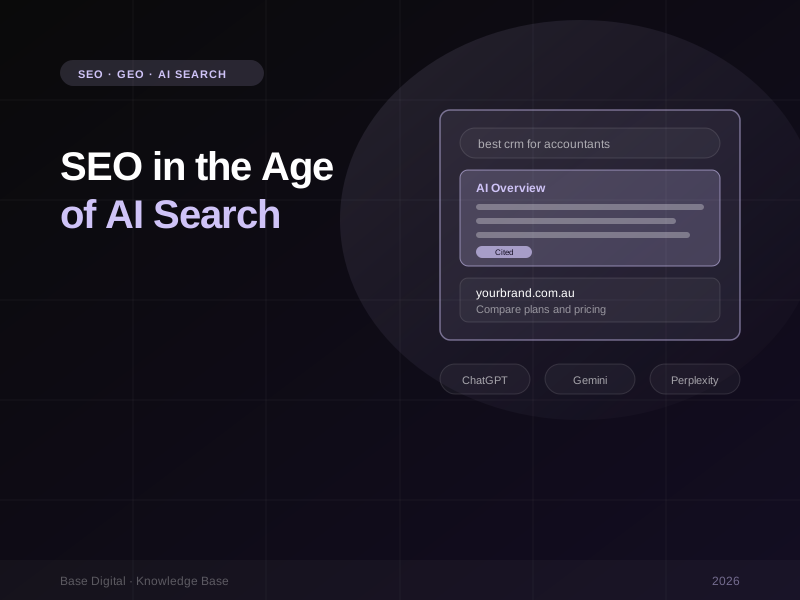
Google now answers many questions directly with AI Overviews and AI Mode. At the same time, a growing share of research-style questions never reach Google at all, because people ask ChatGPT, Gemini or Perplexity instead. SEO hasn't died, but the job has shifted. Here's what has actually changed, which searches still send traffic, and where we'd put your effort in 2026.
What has changed in search
Informational queries get answered on the page
Questions like "what is a pillar page", "how often should I service a pool pump" or "difference between a will and a testamentary trust" are exactly what AI Overviews are built for. Google summarises the answer, cites a handful of sources, and many people get what they need without clicking anything. Ranking first for those queries still has value, but it no longer guarantees a visit.
Google's own position is worth knowing here. Its documentation on AI features and your website says there are no extra requirements or special optimisations needed to appear in AI Overviews or AI Mode. A page has to be indexed and eligible to show a snippet, and the usual SEO fundamentals apply. Google also says clicks from results pages with AI Overviews tend to be higher quality, with people spending more time on the site. In other words, fewer of the casual, bounce-straight-back visits, and more of the people who actually wanted to go deeper.
Research is moving to AI assistants
The second shift happens off Google entirely. When someone is working through a complex decision, such as comparing accounting software, shortlisting builders or planning a product launch, a conversational assistant is often a more natural tool than ten blue links. They can ask follow-up questions, add context and get a tailored shortlist.
That doesn't mean Google is being replaced across the board. Transactional and local searches, like "plumber near me", "buy running shoes" or "dentist Paddington open Saturday", still largely run through Google Search and Google Maps. The pattern we see is a split: research and exploration increasingly happen in AI tools, while the final step of finding, comparing and buying often still lands on Google.
AI recommends brands it can verify
When an AI assistant recommends a business, it isn't checking who bid the most or who has the best meta title. It's drawing on what the wider web says: your own reference pages, review platforms, industry publications, directories, comparison articles and forums. Brands with a strong, consistent presence across those sources get mentioned. Brands that only exist on their own website often don't.
"AI visibility is downstream of reputation. If the web doesn't talk about you, the assistant won't either."
Which searches still drive clicks
Not every query is equally affected. Broadly, the searches most likely to end without a click are:
- Simple facts and definitions. "What does GST stand for", "how many grams in a cup of flour".
- Quick how-to questions. Short procedural answers that fit neatly into a summary.
- Instant answers. Weather, time zones, conversions, sports scores and similar.
The searches that still reliably send people to websites are the ones where the answer is the website, or where the person needs to act:
- Commercial investigation. "Best CRM for small accounting firms", "Shopify vs WooCommerce for a homewares store".
- Comparisons and alternatives. People want the detail, the pricing table and the trade-offs, not a two-line summary.
- Transactional searches. Buying, booking, getting a quote or making an enquiry all require a click.
- Branded searches. Someone typing your name usually wants your site, although AI Overviews now appear on many brand searches too. We covered that shift in Google is now answering questions about your brand.
- Local intent. Map results, directions, opening hours and calls.
The practical takeaway: if most of your organic traffic plan relies on ranking for broad informational questions, it's time to rebalance towards commercial and transactional intent, where clicks still convert into revenue.
What matters more now
First-hand experience and trust
Generic content that restates what's already on page one is exactly what AI summaries make redundant. If an AI Overview can produce the same answer from five other sources, your page adds nothing. Google's guidance on creating helpful, people-first content frames quality through E-E-A-T (experience, expertise, authoritativeness and trustworthiness) and states plainly that trust is the most important of these.
For a business, that means content that could only come from you: what you've seen on real jobs, your own photos, worked examples, honest pros and cons, clear authorship and credentials, and up-to-date facts. That kind of material is harder to summarise away and more likely to be cited as a source.
Topical authority over single keywords
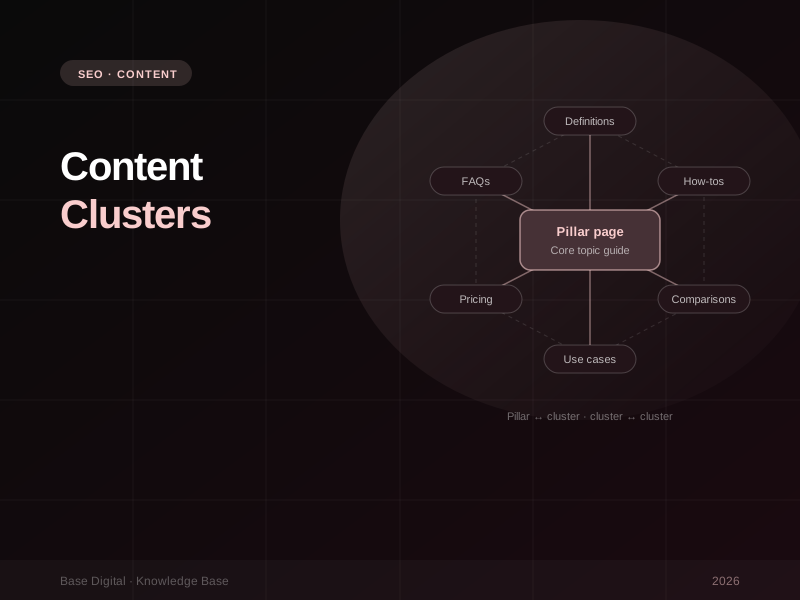
Chasing one keyword per page made sense when search engines matched strings. Today's systems, AI or otherwise, look at whether a site genuinely covers a subject. Google notes that AI Overviews and AI Mode can run several related searches across subtopics to build an answer. A site that covers a topic thoroughly, with connected pages on definitions, how-tos, comparisons and use cases, gives those systems more reasons to draw on it. That's the logic behind content clusters.
Satisfying the full intent
A page that ranks but leaves people needing to search again is a weak page. Think about the next question someone will have after reading, and answer it. For commercial pages, that usually means pricing guidance, timelines, what's included, who it suits and who it doesn't.
Brand demand
Branded search is one of the few areas you can grow directly, and it's a strong signal of trust for both people and machines. Every channel that builds awareness, from paid social and email to PR, events and partnerships, feeds it. If people search for you by name, you're far less exposed to changes in generic results.
What to do: a practical action list
- Enrich your informational pages. Add something an AI summary can't produce on its own: original data, real examples, screenshots, project photos, expert commentary or a clear point of view. Then make the opening answer concise so it's easy to cite.
- Build topic clusters around what you sell. Group content into connected sets with a strong pillar page and supporting articles, linked properly in both directions.
- Shift investment to commercial intent. Prioritise service pages, comparison pages, pricing explainers, "best for" pages and alternatives content. These still earn clicks and they're closest to revenue.
- Create content that requires a visit. Calculators, quote estimators, templates, checklists, interactive tools and original research all deliver value that can't be fully delivered in a summary.
- Strengthen your off-site footprint. Keep Google Business Profile, directories and review platforms accurate. Earn mentions in industry publications, partner sites and credible lists. These are the sources AI tools lean on.
- Make your site the clearest source of truth. A plain-language About page, service pages that open with a direct answer, FAQs that reflect real questions, and structured data that matches the visible content on the page.
- Grow owned channels. Email lists, communities and returning customers aren't affected by search layout changes. Use search to acquire, and owned channels to keep.
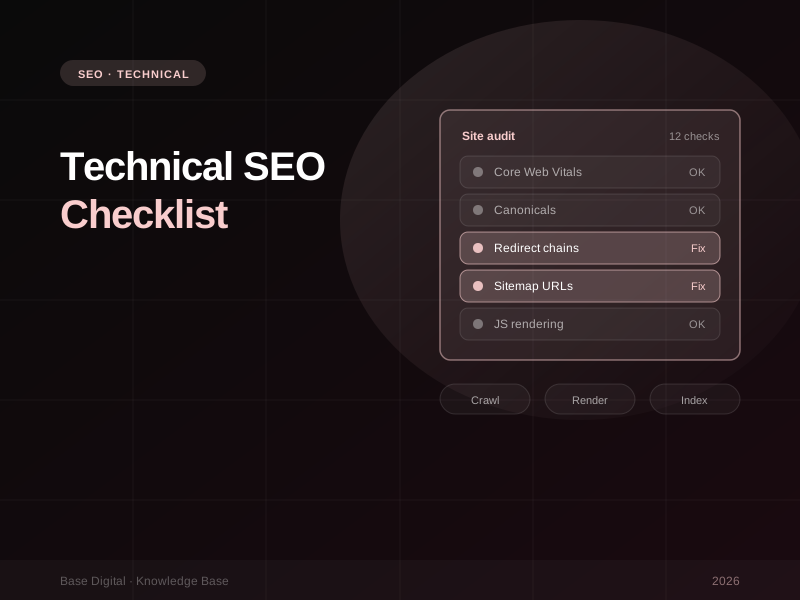
- Get the technical basics right. Pages have to be crawlable and indexable before any of this matters. Check robots.txt, your CDN or firewall settings, internal links and index coverage in Search Console.
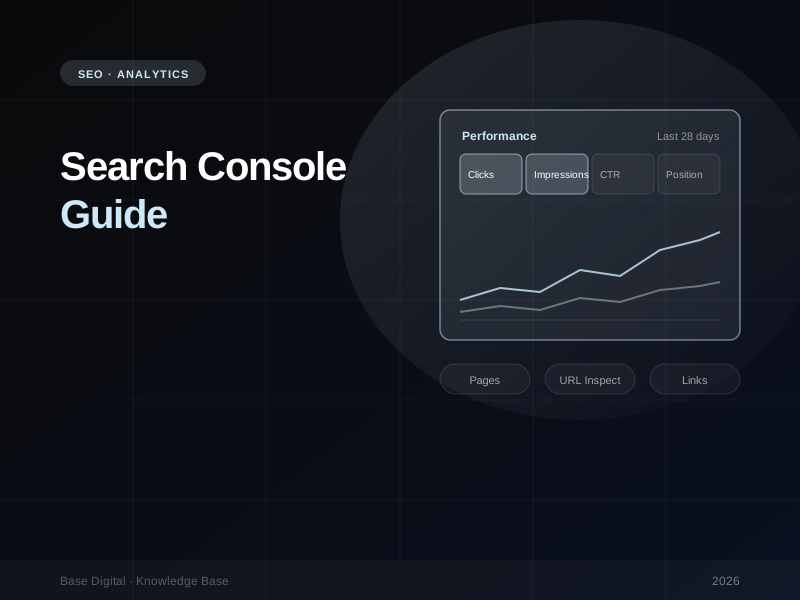
Measure what matters now. Rankings alone no longer tell the story. Track clicks and impressions by query type in Search Console, organic key events and revenue in GA4, branded search volume over time, and manually check how AI Overviews, ChatGPT, Gemini and Perplexity describe and cite you each quarter.
Rethinking how you report on SEO
If your monthly report still leads with "average position", it's probably telling you a misleading story. Traffic from AI features in Google is included in the normal Search Console Performance report under the Web search type, so it won't show up as a separate line. That makes it more important to segment by intent.
We'd suggest splitting your queries into three buckets: branded, commercial and informational. Watch clicks, impressions and click-through rate for each. A falling click-through rate on informational queries with steady impressions usually points to AI answers, not a ranking problem. A fall on commercial or branded queries is the one to investigate quickly. Pair that with key events from organic traffic in GA4, because a smaller volume of better-qualified visits can still mean more enquiries.
What hasn't changed
It's easy to overcorrect. The foundations still apply: fast, accessible pages, clean site architecture, sensible internal linking, accurate structured data, useful content written for people, and links from credible sites. Google's AI features are built on top of its core search systems, so a site that's weak at traditional SEO rarely does well in AI results. Generative engine optimisation is an extension of good SEO, not a replacement for it.
The bottom line
Search hasn't stopped working, but the easy traffic from simple questions is shrinking. The businesses that keep growing are the ones that publish genuinely useful, first-hand content, cover their core topics in depth, invest where clicks still lead to revenue, and build a reputation the rest of the web can vouch for.
If you're new to the AI side of this, start with What is Generative Engine Optimisation and why does your brand need it now? Or if you'd like to know how visible your business is across Google and AI assistants, talk to us about GEO and AI search.