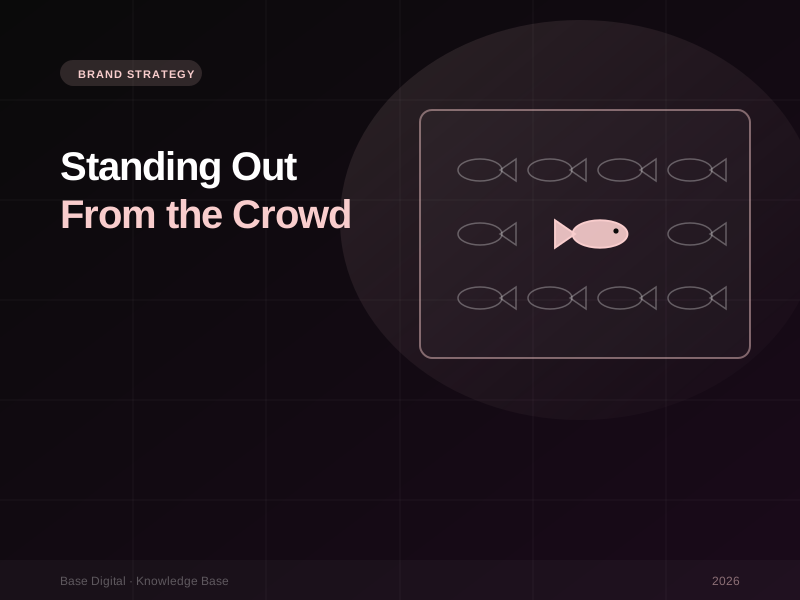
There's an old piece of marketing wisdom: fish where the fish are. Go where your customers already spend their time. Sound advice. The problem is that every one of your competitors heard it too.
So now everyone is fishing in the same spot. Same Meta feed, same Google results page, same LinkedIn scroll, same inbox. And most of them are using the same bait: stock imagery, "quality service at competitive prices", a 10% off code and a stock-standard call to action.
The answer isn't to go and find an empty lake somewhere. Empty lakes are usually empty for a reason. The answer is to stay exactly where the fish are biting, and change the bait.
Here's the other thing worth knowing. Most of your potential customers aren't ready to buy right now. Research from the Ehrenberg-Bass Institute suggests that in B2B, only around 5% of buyers are in-market at any given time. The rest will buy eventually, and when they do, they'll reach for the brands that come to mind first. Standing out isn't just about grabbing attention today. It's about staying in consideration until they're ready.
1. Break your category's visual conventions
Every category has a uniform. Law firms use navy and gavels. Real estate uses drone shots and sold stickers. Skincare uses white backgrounds and dewy close-ups. Wearing the uniform makes you look credible, but it also makes you invisible.
Try this: screenshot the ads and homepages of your top five competitors and lay them side by side. Then cover the logos. If you can't tell whose is whose, neither can your customers. Find the convention everyone follows, and do something deliberately different. A different colour, a different tone, a different kind of photography. You'll stop the scroll simply by not looking like everyone else.
2. Build distinctive brand assets, and stick with them
Distinctive assets are the things people recognise as you without seeing your name: a colour, a character, a sound, a shape, a phrase. Think of the Bunnings red and green, or the Qantas kangaroo.
You don't need a national budget to build them. You need consistency. Pick two or three assets and use them everywhere, every time, for years.
Pro tip: The biggest risk is boredom. Marketers usually get sick of their own branding long before customers have even noticed it. Resist the urge to refresh.
3. Own the moments that matter to your buyer
People don't think about your category in a vacuum. They think about it in specific situations: "I need a quick dinner", "my website's broken", "we're moving interstate". Marketers call these category entry points.
List the situations in which someone might need what you sell, then make sure your content and ads speak to them directly. A brand linked to more of those moments gets thought of more often. It's one of the simplest ways to show up when it counts.
4. Say something your competitors won't
Most marketing copy plays it safe, which is why most marketing copy sounds the same. Look for the honest, specific or slightly brave thing you can say that others in your category wouldn't dare:
- A clear point of view on a common industry practice.
- Plain-English pricing where everyone else says "contact us".
- A guarantee that shows real confidence in your product.
- Who you're not for, as well as who you are for.
Specific beats generic every time. "Same-day dispatch before 2pm" lands harder than "fast shipping".
5. Show up consistently, not in bursts
Plenty of brands run in stop-start mode. A big campaign, then silence, then another big campaign. Every restart means rebuilding the awareness you let slide.
An always-on presence keeps you in consideration while people aren't buying, so you're top of mind when they are. That doesn't mean a big budget. It means a sensible baseline of brand activity, such as video views, retargeting, an email newsletter and regular organic content, that never fully switches off. Then layer sales-driven campaigns on top.
6. Let your people and customers do the talking
Your competitors can copy your offer. They can't copy your people, your story or your customers. Put real faces in your content. Share the founder's perspective. Feature genuine customer stories and reviews.
This matters even more now that AI tools summarise brands for buyers. What others say about you, in reviews, articles and social posts, increasingly shapes how you're described. Authentic, distinctive content gives those tools, and real people, something worth repeating.
The bottom line
You don't need to find a secret new channel to grow. Your customers are already on Meta, Google, LinkedIn and in their inbox. So are your competitors. The difference comes down to the bait.
Look different from your category. Build assets people recognise. Own the moments your buyers care about. Say something worth hearing. Stay visible between sales. Do those things consistently, and you'll be the brand people think of first when they're finally ready to bite.
If you're not sure how your brand stacks up against the competition, book a free strategy call with Base Digital. We'll take an honest look at your ads, site and messaging, and show you where you blend in.