When it comes to running a marketing campaign, sometimes even the greatest marketing minds cannot always get it right the first time. No amount of research or experience will always guarantee success. One saving grace, however, is without a doubt A/B testing.
What is A/B testing?
A/B testing is a powerful optimisation tool in the marketer's toolbox, and while it has been around for a while, it is not one to sleep on. As marketers, we are pretty good at EDMs, copywriting, landing pages and killer calls-to-action. After all, it really is our bread and butter.
One thing we can confidently accept defeat on, however, is mind reading. There is no crystal ball in sight, no manifestation sessions and unfortunately no tarot cards within arm reach. This means that making blanket assumptions about what your audience will engage with is a sure-fire way to blow both your budget and your time.
"A/B testing takes the guesswork out of running a campaign and improves your overall return on investment — a no brainer."
A/B testing in action
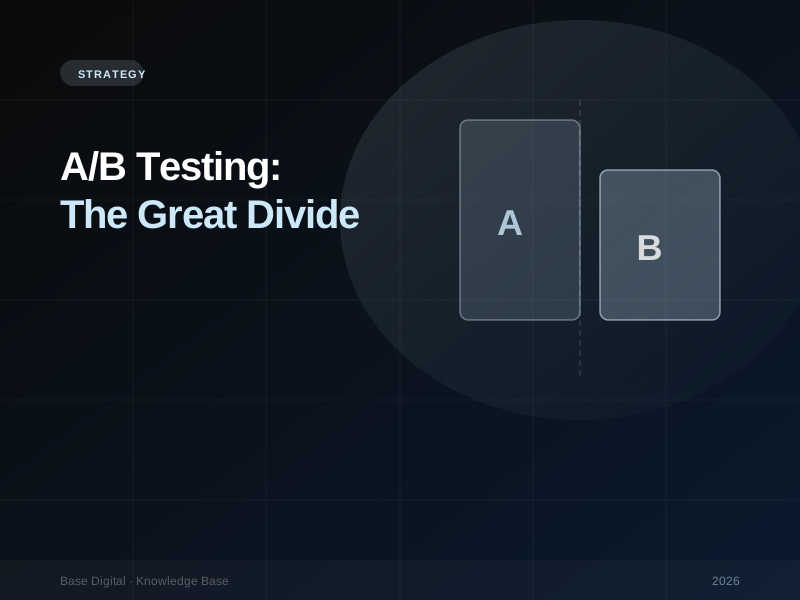
As the name suggests, A/B testing is a process where your audience is split into two groups, and each is served two variations of the same campaign. This provides an unbiased and accurate insight into what elements work best in achieving the desired outcome — clicks, conversions and all the good stuff.
In a nutshell, it takes the guesswork out of running a campaign and improves your overall return on investment. It is the closest thing we have to a crystal ball.
What can you A/B test?
The answer is pretty much anything and everything. We recommend narrowing your focus to the variables that will yield the greatest impact on your results. Some of our top variations to test routinely include:
- User experience features such as the placement and ordering of certain features on your website
- Design features such as the colour of your call-to-action buttons
- Email features such as the subject line, emojis, images, delivery time and buttons
When A/B testing is done consistently and for long enough — we recommend at least two weeks — you will gain a better grasp of your target audience and stay ahead of ever-changing trends. Not only will you gain insights, you will be armed with data to back up every future decision.
A shared goal between all marketers is optimisation success. Being well versed in A/B testing will certainly work in your favour when it comes to achieving this. If you have not yet tried A/B testing, it is time to start.